The Overton Window Revisited
Friday, 27 March 2026By Patricia Lustig and Gill Ringland
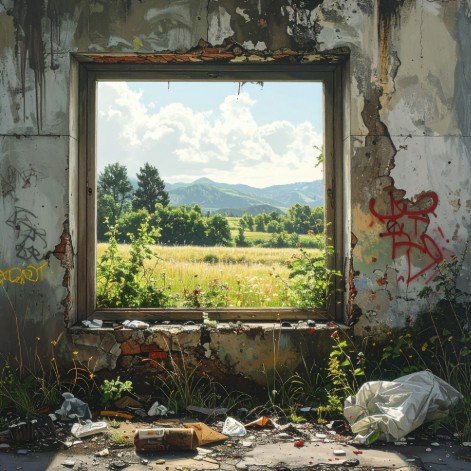
This is the first of two Pamphleteers taking a review of the Overton Window at the end of 2025. In this first one, we use the concept of Backbones – fractured, broken, evolving – to map some of the changes in the Overton Window. In the second, we look for evolving Backbones that are supporting changes, and highlight the opportunities that result.
In 2019 we first explored the Overton Window as a model for how ideas change over time and how they influence what happens in politics. It is named after Joseph P. Overton, who stated that an idea's political viability depends mainly on whether it falls within this range, rather than on politicians' individual preferences. According to Overton, the window contains the range of policies that a politician can recommend without appearing too extreme to gain or keep public office in the current climate of public opinion. It can shift and expand as societal norms and values change, but this is a slow change. The Overton Window may differ between countries. We argued that over the previous decades, the Overton Window had shifted from endorsement of cooperation and tolerance to divisiveness in many places. In the UK as one example, oligarchy had increased divisiveness. Societies developed euphemisms so that ideas were masked – and policies that would not be acceptable if spoken about, were able to fly under the radar through social media.
The concept of Backbones emerged as we considered decision making in the current environment, conditioned as it is by threats. Threats will happen albeit at an unpredictable time and when they do, the impact will be sudden and big. For instance, global heating is causing disruptive extreme weather across the world. The outcomes or impact of a threat depend on the strength or absence of what we called Backbones.
We define Backbones as agreed upon sets of rules which support the way that things work. They are based upon the rule of law and shared assumptions between organisations and people. Backbones cover many aspects of life such as financial services, governance, health, and international (technical and professional) standards.
We observed that a number of Backbones which have been important over the past decades are no longer fit for purpose: broken, or fracturing, rather than evolving to be successful. The absence or disfunction of Backbones limits the capability of society to mitigate or to adapt to threats.
As Backbones fracture, the Overton Window of acceptable political actions changes.
In 2022 we used the Overton Window metaphor to flag shifts in the international order.
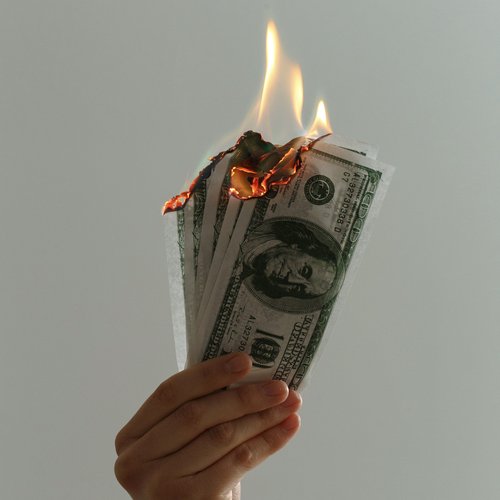
First, we noticed that between 2020 and 2022 there had been a shift from public awareness of global warming in an unfocused way, towards asking how MUCH it will cost to address climate change and global warming. This reflected a change - those asking the price were considering DOING something about it. This is a shift in the Overton Window towards positive action by individual organisations, without the support of a regulatory Backbone.
Second, the Overton Window has shifted on Ecocide. “Ecocide means unlawful or wanton acts committed with knowledge that there is a substantial likelihood of severe and other widespread or long-term damage to the environment being caused by those acts”. The founding document of the ICC in 1998 did not include environmental destruction. In September 2024 Ecocide was introduced for consideration by member states of the ICC. This amendment would make Ecocide the fifth International crime together with genocide, war crimes, crimes against humanity and the crime of aggression.
Damage to the environment is coming onto the agenda as an international criminal offense with Boards held responsible for the actions of their organisations. The ICJ is an evolving Backbone, albeit one under many tensions. For instance, in 2025, it issued a non-binding landmark ruling clearing the way for countries to sue one another over climate change. For the nations most affected by climate impacts, this creates a new legal pathway – which carries “great legal weight and moral authority” - for establishing accountability and remediation costs from polluting nations.
The third example is the speed of the shift of the Overton window between 2019 and 2022. Early in 2022, Russian troops were 'training' on the Ukraine border. Ukrainians, NATO, the EU, the US, all assumed that the purpose of the build-up of troops on the border was to blackmail Ukraine into becoming more closely joined economically and socially to Russia rather than to Europe. In March 2022, Putin explained his wider and deeper objectives: to use any means to incorporate Belarus and Ukraine into a greater Russia.
Since then, the Overton Window in Europe has shifted towards an emphasis on defence. The EU countries have reduced their dependence on oil and gas. The verbal and social media statements from Trump have caused NATO countries to reexamine dependence on the US as a NATO ally, while his approaches to Greenland have further exposed the fractures in NATO (another Backbone).
By 2025 it became clear that the Overton Window had shifted even further. As Gillian Tett observed in the Financial Times[1], “Globalisation is undermined by nationalism, free market principles are corroded by government meddling, democracy has lost ground to oligarchs.”
It has been difficult for people to see the effect this has on the world. Like in the classic Marketing Case study, in which an umbrella company looks for causes like weather, suppler difficulties, and staffing for declining sales: they finally realise that people now often wear coats which have hoods, making umbrellas redundant.
What is the new paradigm? What Backbones are needed?

A special address by Mark Carney, Prime Minister of Canada, delivered at the World Economic Forum's Annual Meeting 2026 in Davos, emphasised the end of the rules-based international order and outlined how Canada was adapting by building strategic autonomy while maintaining values like human rights and sovereignty. He called for middle powers like Canada, to work together to counter the rise of hard power and the great power rivalry, in order to build a more cooperative, resilient world. He sees middle powers as having the capacity to build a new order that encompasses values such as respect for human rights, sustainable development, solidarity, sovereignty and territorial integrity of the various states. The power of the less powerful starts with honesty.
Mark Carney accepts that the Backbones that underpinned globalisation, free markets and democracy are fractured. He is proposing that middle power nations cooperate outside the structures historically dominated by great powers - US, Russia and China. He is looking for coherent positive views of the future to provide a lever to start to move the Window back towards living with respect for our neighbours. People can recognise Fractured Backbones more easily than they can imagine how to develop a future based on new paradigms and newly designed, successful Backbones. Carney’s ideas provide a basis for building new Backbones.
In our next Pamphleteer we explore some developments in 2025 that suggest possible ways forward as new Backbones are developed.
Patricia Lustig and Gill Ringland, February 2026
See our latest book The Possibility Wheel: Making better choices in a fractured world (2024) published by Triarchy Press, also available on Amazon.
[1] Gillian Tett, “Why we should know what we don’t know”, Financial Times, 1.1.2026