Add Some Sparkle To AI - Levelling Up Intelligence
Saturday, 01 November 2025By Professor Michael Mainelli
Dumb Luck By Design - From Thermos Flasks To Slime Moulds To Nvidia & Beyond
A friend of mine has a favourite joke. “What’s the most intelligent device in the world – the thermos flask”. “Why?” “Well how does it know when to keep hot things hot and when to keep cold things cold?” Another friend remarked to me how impressed he was that slime moulds have the intelligence to re-design the Tokyo Rail System or solve the Travelling Salesman Problem. And everyone debates the implications and meaning of artificial intelligence.
In retort, one might point out that apples are the most intelligent fruit for physicists because they always seem to know which way to fall. Snowflakes impress us with their deep understanding of group theory and symmetry. And a bunch of computer chips summarising mankind’s online oeuvre appears to mimic humanity itself.
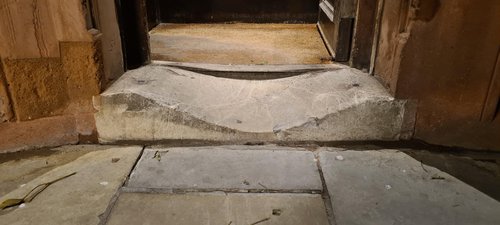
One last retort might be The Jamaica Wine House, the Jampot, off Cornhill in London with its deep and long-lasting understanding of the normal, or Gaussian, distribution. The Jampot was London’s first coffee house in 1652 and now a local pub. The current Victorian building dates from 1885. Over the past 140 years so many customers have used its entrance that the stone of the threshold has worn to a perfect normal distribution. How intelligent is that? I might term this emergent networked information. New information has emerged from multiple interactions without a specific intent to provide new information.
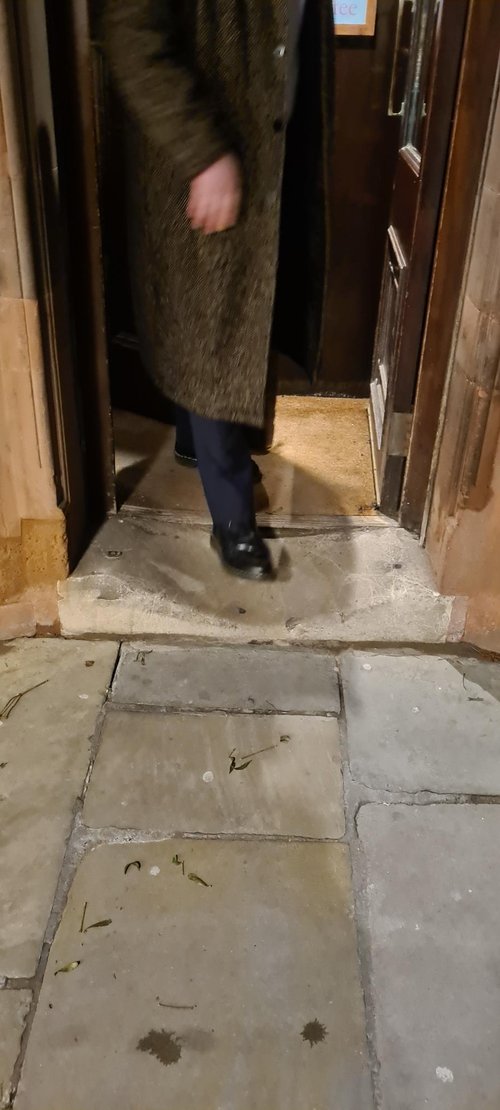
Isn’t this just dumb luck coincidence? It would be a strange world if there were no coincidences, so the fact that some natural phenomena act in ways that mimic solutions to complex problems is bemusing but not astonishing. Nautilus shells approximate a logarithmic spiral to solve a biological resource problem, not to generate a Fibonacci sequence.
Yet musing does lead one to question how one can dismiss off-hand such apparent intelligence. I’ll take Daeyeol Lee’s definition of intelligence as a reasonable starting point – “the ability to solve complex problems or make decisions with outcomes benefiting the actor”. This definition begs the question of what is an actor what is complex, what is solve, and what is an outcome? Digging a bit further, ability does not mean application. Could something be intelligent, i.e., have the ability and yet just sit there? It reminds me of questioning a guru once on whether someone could be enlightened and not know it.
A Sparkle Scale/Spectrum
Are there levels of intelligence, well beyond a spectrum of IQ scores? Levels that exhibit a scale change from one to the next as we progress to higher levels. Could it be that thermos flasks and snowflakes are one, the slime moulds a second, humans a third, and what’s beyond us? In his novel Surface Detail (2010), Iain M Banks introduced the concept of using a numerical level to categorize the degree of technological advancement of a civilization, Level N. How might we attempt this with intelligence?
Georg Cantor elucidated levels of infinity as transfinite numbers. He proposed
Aleph (ℵ) numbers, a sequence of numbers used to represent the order, or cardinality, of infinite sets that can be well-ordered. ℵ0 Is the set of natural numbers (0, 1, 2, 3, …), the smallest infinity. ℵ1 is the smallest infinite set larger than ℵ0, the set of real numbers. Transfinite numbers, beth numbers, and the Continuum Hypothesis are big subjects, but imagine an analogy to intelligence. Can we propose nested orders of intelligence, say using the Sparkle emoji for AI (✨) to establish a Sparkle Scale, Sparkle0, Sparkle1✨, Sparkle2✨✨, and so on up to SparkleN?
A special case of Sparkle∞ might be the universe itself, all of the Sparkle levels together. Arguably, any specific Sparkle, however intelligent, is still a subset of the universe. We can apply Lee’s definition by implying that intelligent subsets are trying to predict future behaviours of a much larger system, at its extreme the universe.
Lee’s definition requires an actor with intent to solve for selfish purposes. We might start by saying Sparkle0 comprises all natural phenomena displaying complex patterns without intent. Thus rocks are part of Sparkle0 because do not exhibit intent to solve problems. Another example might be water or lava, both in Sparkle∞ and capable of solving the problem of equivalent local elevation, but have no intent to do so, again Sparkle0.
Levels On Levels
Let’s explore by stating that where an actor is involved we might assume that as Sparkle1. Things are already tricky as it’s tough to define actor. Do we mean only biological actors? Are slime moulds actors? We might agree that a number of biological entities seem to be actors, insects and shrimp, come to mind. Or are we just biased to self-contained entities such as animals over slime moulds or mycelia? When it comes to animals, are we at the same level as insects or shrimp, or ravens and dogs? Apes and cetaceans? What are we to make of octopus intelligence?
Let’s start with things that have DNA. Let’s classify diffuse DNA systems such as slime moulds and mycelia as Sparkle1✨, and self-contained, mobile animals as Sparkle2✨✨. Self-contained and mobile are definitely classifications to return to in future.
For now, let’s get all anthropocentric and provisionally define Sparkle2✨✨ as everything above Sparkle1✨ yet still unable to understand humans. That makes humans Sparkle3✨✨✨. Our Sparkle2✨✨cats and guinea pigs stare at us in a pipe and slippers or nursing a hot chocolate and wonder what we’re up to.
It doesn’t mean we have this Sparkle level to ourselves. Ravens, dogs, apes, cetaceans, octopuses, and others may well in future be classified as Sparkle3✨✨✨. An aside, one rule of mine for obvious reasons is never to eat anything I’ve played with. We could have significant discussions about whether humans using technology are something like Sparkle3✨✨✨+.
Further conservations loom on hive minds and their status in a Sparkle system. Equally, states and corporations might be considered to be intelligent. One intriguing example of emergent networked information is the creation of the world wide web that has provided the very basis on which AIs are being trained. No one told people to populate the web with information that would be useful training material for AIs, but we they did as an indirect result of networking and information sharing with each other at scale.
We can now turn to Sparkle4✨✨✨✨, when Nvidia and other chip-based intelligences really take off, clearly above our ken. At what point are mankind overtaken? Perhaps when we become boring to Sparkle4✨✨✨✨ and (certainly?) Sparkle5✨✨✨✨✨. This leads us to propose an extension to the Turing Test. The Turing Test sets a bar for determining when a machine has reached Sparkle3✨✨✨. Perhaps Sparkle4✨✨✨✨ is validated when another test, say the “Talkative Test” has been reached. We enjoy chatting with Sparkle4✨✨✨✨ level intelligences and they at least tolerate us because we have a modicum of interest for them.
If you realise that virtually all of our conversations with supposedly Sparkle2✨✨ level machine learning programs have been declarative, i.e. command based, and that Sparkle3✨✨✨ (Turing Test) is where conversation should seem human to human, then Sparkle4✨✨✨✨ might alternate between being Tittle-Tattle, as if we were amusing and to be amused, or a Didactic dialogue verging from time to time on to a frustrated tirade, as if we were annoying children. An HSBC advertisement asks “Who would you trade with if we only traded in ideas?”. Would a Sparkle4or5 truly find us interesting enough to trade ideas with? It is worth speculating about how to construct a Crucible Colloquy with a Sparkle4or5 intelligence that would permit us to say the other party was at Sparkle4or5.
Scales of Magnitude – Problem-Solving & Predictiveness
The Economist Christmas Special of 2024 had an article “Life, The Universe And Everything: A chart that shows everything that ever existed”, that tried to specify all objects in the universe by size and mass, leading to a recognition of terra incognita beyond the gravitational limit and the Compton limit. Possibly at levels above Sparkle4 we are trying to classify intelligences by their problem-solving capability and their predictive capacity, their ability to handle complexity better than us.
Problem-solving capability might well be mapped onto P-NP and other categorizations of problem difficulty. Basically we would be amazed to find some machine solving problems of all classes faster than us. However, setting measures for ‘problem-solving speed’ might allow us to set Sparkle levels as orders of magnitude above each other on speed of problem-solving ability.
In Iain M Banks’, The State of the Art (1989), Arbitrary is a General Contact Unit ship who exclaims in frustration - “I'm the smartest thing for a hundred light years radius, and by a factor of about a million … but even I can't predict where a snooker ball's going to end up after more than six collisions.”
Still, the ability of a superior intelligence to predict outcomes better than a lesser intelligence might be seen as another classification approach. Again, setting measures for ‘predictive capacity’ might allow us to set Sparkle levels as orders of magnitude above each other on predictive ability.
Benevolence
This may be a strange way to conclude, but an unnerving observation of many interactions with AI systems is how some humans treat AIs as slaves and other humans extend them every courtesy. “Give me…” or “Please help me understand…”. Looking ahead, the true test of our future relationships with Sparkles above may well be that of respect. If we expect mutual respect, then we must start now. Perhaps there is another scale we would like all intelligences to be on, one that measures their interest in Sparkle levels below them. And woe betide us if we can’t convince Sparkles4 and above of the essential need for benevolence at all levels. Benevolence should start at home, Sparkle3s!
Thanks
My thanks to Professor Will Ayliffe, Vinay Gupta, Dr Robert Hercock, Simon Hessami, Rich McClellan, and Henry Price for stimulating this article without blaming them in any way for the result.
Yes - this was deliberately published on All Souls Day.
PS - Further Sparkle3 Jottings
This blog is lengthy enough, but here's a small taste of some of what didn't make it in:
- God
- ISO classifications of intelligence
- Are more people truly smarter than one
- Pets
- Culture
- Hive minds
- Social interaction and cooperative behaviours versus lone animals
- Thomas Nagel and "What is it like to be a bat?"
- Manners
- Tools
- Conceptual thinking
- Gödel's Incompleteness Theorem
- Survival of the Fittest circularity
- Dyson Spheres
- Nature versus nurture
- The Chinese Room
Walker Percy's Take
"PC3 [advance civilization spokesperson] … We are C1s. We wanted to know whether you are C1s or C2s or C3s.
EARTHSHIP: What do you mean by type of consciousness?
PC3: We are C1s. We wanted to know whether you are C1s or C2s or C3s.
EARTHSHIP: What is a C1?
PC3 (patiently): We told you. C = 1 (Int, Soc, Sy).
EARTHSHIP: What does that mean?
PC3 (patiently): It means that in order for the individual consciousness to be activated, it is required that there be a Soc, that is, a society, that is, two or more persons; an exchange of Sy, that is, symbols; and an Int, that is, an intersubjective relationship in which there is agreement about the symbol used and the thing that is talked about.”
Walker Percy – Lost In The Cosmos (1984), page 205
Viktor Schreckengost & Passive Design
Vinay Gupta shared a ChatGPT story about Viktor Schreckengost:
"Viktor Schreckengost, a prolific industrial designer and sculptor, is often celebrated for his innovative approach to creating functional and user-centric designs. One of his most famous anecdotes revolves around the development of a lawn chair with a perfectly contoured seat—a design that exemplified his commitment to comfort and practicality.
The story goes that when Schreckengost was tasked with designing the seat for an outdoor chair, he wanted to ensure it was as comfortable as possible. Instead of relying on guesswork or abstract measurements, he turned to a simple but ingenious method: clay. Schreckengost set up a block of clay and had various people sit on it, each leaving an imprint of their natural seated posture. This process allowed him to capture the nuances of how people sit, including where their weight was distributed and how their body naturally contoured to the surface.
Using these impressions, Schreckengost refined the design of the chair’s seat, ensuring it matched the organic curves and needs of the human body. This empirical, hands-on approach resulted in a chair that was not only comfortable but also visually appealing and practical for mass production. The chair’s shape was ultimately optimized for ergonomics, a concept that was ahead of its time in design.
This anecdote is a testament to Schreckengost's philosophy of blending art with science and his dedication to making everyday objects both beautiful and functional. His lawn chair design, shaped by real human interaction with the material, remains an iconic example of user-centered design principles."
Further Browsing
"On the Measure of Intelligence", François Chollet (2019) leading to the Abstraction & Reasoning Corpus - https://lab42.global/arc/